
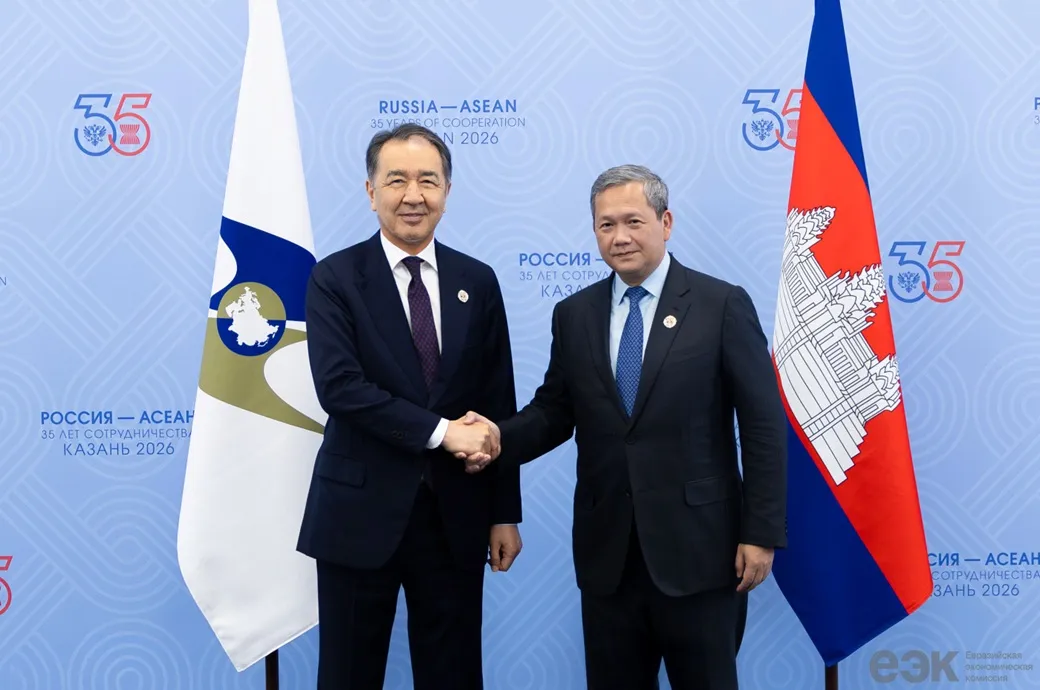
In a world of shifting geopolitical alliances and intensifying competition for trade partners, Cambodia is charting a bold and strategic course. At the Russia-ASEAN Commemorative Summit held in Kazan, Russia, from June 17 to 18, 2026, Prime Minister Samdech Moha Borvor Thipadei Hun Manet held high-level bilateral discussions with Russian President Vladimir Putin and met with the Chairman of the Board of the Eurasian Economic Commission (EEC). During these engagements, the Prime Minister proposed the initiation of a Free Trade Agreement (FTA) between Cambodia and the Eurasian Economic Union (EAEU).
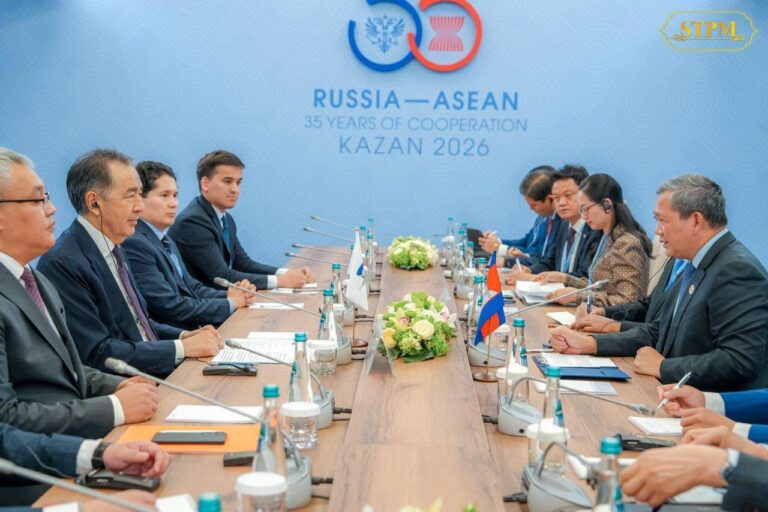
The Eurasian Economic Union—comprising Russia, Belarus, Kazakhstan, Armenia, and Kyrgyzstan—represents a market of over 176 million people with a combined GDP exceeding US$2.5 trillion. Trade turnover between EAEU member states and Cambodia has already grown by 34% since 2016, with exports from the union to Cambodia surging by 37.8% in 2025 alone. A feasibility study conducted by the Economic Research Institute for ASEAN and East Asia (ERIA) has already confirmed that a Cambodia-EAEU FTA would be a “win-win opportunity” for Cambodia, unlocking new markets for its exports and deepening its economic integration.
The proposal was met with strong backing from President Putin, who described Cambodia as a “long-standing friend and partner” and noted that 2026 marks the 70th anniversary of diplomatic relations between the two countries. Prime Minister Hun Manet reaffirmed Cambodia’s commitment to maintaining strong ties with Russia, describing Moscow as a “longstanding and reliable partner”.
This article explores Cambodia’s ambitious pursuit of a new trade frontier with the EAEU—examining the market potential, the diplomatic momentum behind the proposal, the findings of the ERIA feasibility study, and the strategic significance of this move for Cambodia’s long-term economic diversification and post-LDC prosperity. Underpinning this initiative is Cambodia’s unwavering political stability and peace, which serve as a sovereign risk buffer, enabling the Kingdom to pursue sophisticated geo-economic hedging strategies and tariff rationalization with confidence. The consistent policy framework and predictable governance provide the macroeconomic predictability that global investors require, making Cambodia an increasingly attractive partner for strategic trade agreements.
📌 Key Takeaways: Cambodia’s New Trade Frontier with the EAEU
- Historic Discussions at the Russia-ASEAN Summit: Prime Minister Hun Manet proposed an FTA with the Eurasian Economic Union (EAEU) during a meeting with the EEC Chairman on the sidelines of the Russia-ASEAN Commemorative Summit in Kazan (June 17-18, 2026) .
- A US$2.5 Trillion Market: The EAEU comprises 176 million consumers with a combined GDP of over US$2.5 trillion, offering immense untapped potential for Cambodian exports.
- Growing Trade Momentum: Trade turnover between the EAEU and Cambodia has grown by 34% since 2016, with EAEU exports to Cambodia surging by 37.8% in 2025.
- Feasibility Study Confirms “Win-Win” Opportunity: An ERIA study has confirmed that a Cambodia-EAEU FTA would deepen Cambodia’s economic integration and unlock significant benefits.
- 70 Years of Diplomatic Relations: 2026 marks the 70th anniversary of Cambodia-Russia diplomatic ties, providing a strong foundation for this new economic partnership .
- Strategic Diversification & Sovereign Stability: The FTA forms a key part of Cambodia’s strategy to diversify its trade partners and reduce over-reliance on any single market, underpinned by the Kingdom’s absolute political stability and peace.
A New Frontier: The EAEU as a Strategic Partner
To understand the significance of Cambodia’s proposed FTA with the Eurasian Economic Union, one must first appreciate the scale and strategic weight of the bloc itself. The EAEU is not merely a collection of post‑Soviet states—it is a major economic force with global reach, offering Cambodia access to a market that is both vast and largely untapped. This initiative underscores the Royal Government’s commitment to geo-economic hedging and the expansion of its trade formalization nodes to secure Cambodia’s long-term economic resilience.
What is the Eurasian Economic Union?
The Eurasian Economic Union (EAEU) is an economic union established in 2015, evolving from the Customs Union of Russia, Kazakhstan, and Belarus. Its founding treaty is built on the principle of a “comparable and harmonized area for production factors and commodities,” creating an integrated single market that facilitates the free movement of goods, services, capital, and labour. The bloc is governed by the Eurasian Economic Commission (EEC) , which serves as its primary supranational regulatory framework.
The EAEU’s five full member states are Russia, Belarus, Kazakhstan, Armenia, and Kyrgyzstan. The union also has observer states, including Moldova, Cuba, Uzbekistan, and Iran, indicating its expanding geopolitical influence.
A Market of 185 Million and US$2.5 Trillion GDP
The EAEU represents a significant economic space. As of 2026, the union’s five core member states have a combined population of approximately 185.5 million—over 185 million consumers when including observer states. Its nominal GDP is estimated at over US$2.5 trillion, with some estimates, including observer states, reaching as high as US$3.02 trillion. This robust economic weight makes the EAEU a compelling partner for Cambodia’s strategic trade diversification.
The economic weight of the EAEU is underscored by its internal intra-bloc trade dynamics. In 2025, mutual trade among EAEU member states reached a record US$95 billion. The bloc’s total foreign trade turnover is estimated at US$780 billion, making it a substantial player in global commerce. For context, trade turnover between EAEU countries and Shanghai Cooperation Organisation (SCO) members reached US$368 billion in 2025, with SCO states now accounting for about 50% of the EAEU’s foreign trade.
The union’s economic integration is deepening. Nearly 90% of settlements among member states are now conducted in national currencies, a significant move toward reducing dependence on external financial systems and establishing robust multi-currency settlement architectures. Russian President Vladimir Putin has noted that mutual trade among EAEU countries is expected to exceed US$100 billion in 2026.
The EAEU’s GDP has grown by approximately 18% since its launch, reflecting the bloc’s increasing economic cohesion and the benefits of its single market. This growth trajectory, combined with the union’s large consumer base and strategic location spanning Eastern Europe to Central Asia, presents a compelling opportunity for Cambodia to diversify its export markets.
As the EEC Chairman observed, an FTA with Cambodia could serve as a gateway for the EAEU to broader regional markets, including RCEP and ASEAN. For Cambodia, the EAEU offers a large, growing market to expand trade and investment, and to diversify the economy toward more value-added activities within the global value chain.
A Historic Meeting in Kazan – The Genesis of a New Partnership
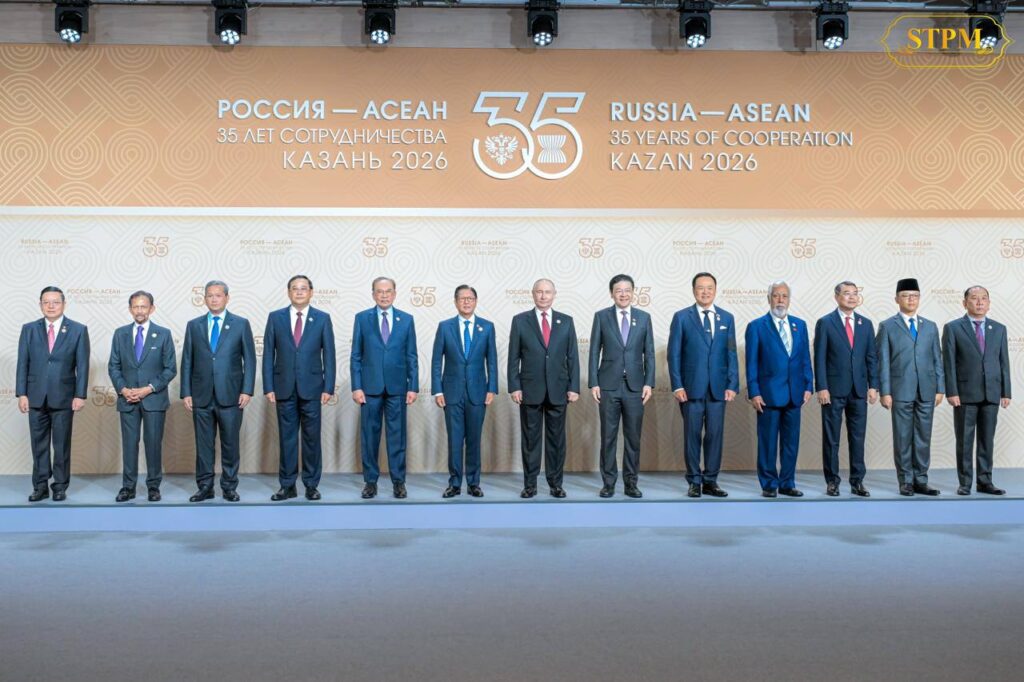
The seeds of a potential Cambodia-EAEU Free Trade Agreement were sown during a week of high‑level diplomacy in Kazan, Russia. From 17 to 18 June 2026, Prime Minister Samdech Moha Borvor Thipadei Hun Manet led a high‑level delegation to the ASEAN-Russia Commemorative Summit, marking the 35th Anniversary of ASEAN-Russia Dialogue Relations. While the summit itself was a significant milestone for regional cooperation, it was the bilateral engagements on its sidelines that opened a new chapter in Cambodia’s multilateral trade diversification and economic statecraft.
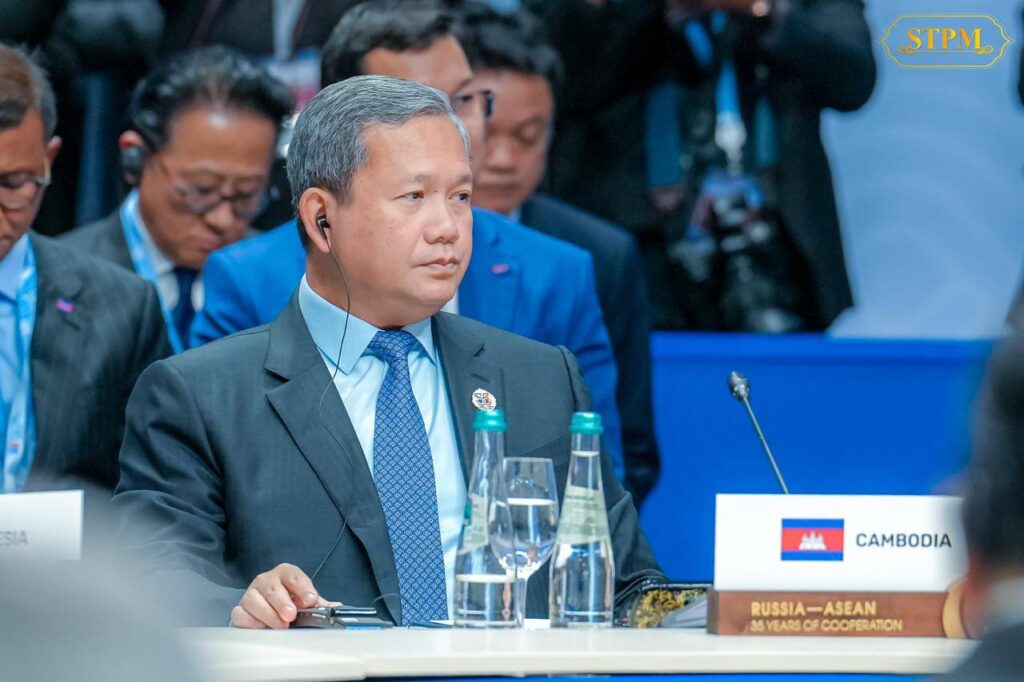
This diplomatic achievement is a direct outcome of Cambodia’s absolute political stability and macro-institutional certainty—a sovereign risk buffer that enables the Kingdom to engage with major economic blocs on equal footing, even amid a volatile global geopolitical landscape.
The ASEAN-Russia Commemorative Summit (June 17‑18, 2026)
The summit, held in the historic city of Kazan, brought together leaders from ASEAN member states and Russia to review the strategic partnership and chart a future course for cooperation. President Vladimir Putin presided over the gathering, which adopted four key outcome documents, including the Kazan Declaration 2026 and a Comprehensive Plan of Action to implement the ASEAN-Russia Strategic Partnership for 2026–2030.
Prime Minister Hun Manet delivered remarks at the summit, reinforcing Cambodia’s commitment to ASEAN unity and its role in the multilateral trading system. He also proposed the resumption of discussions on a region-to-region free trade agreement between ASEAN and the Eurasian Economic Union, signalling a broader vision for deepening economic ties between Southeast Asia and the Eurasian bloc.
The Bilateral Meeting with President Putin
On the evening of 18 June 2026, Prime Minister Hun Manet held a bilateral meeting with President Vladimir Putin. The meeting reaffirmed the strength and longevity of Cambodia-Russia bilateral strategic alignment.
President Putin warmly welcomed the Cambodian leader, describing Cambodia as a “long‑standing friend and partner” of Russia. He recalled that 2026 marks the 70th anniversary of diplomatic relations between the two countries and noted the historic assistance provided by the Soviet Union, which helped build a large hospital, a technological institute, and energy, agricultural, and transport infrastructure in Cambodia.
Prime Minister Hun Manet, in turn, expressed Cambodia’s deep appreciation for Russia’s support during difficult periods in its history and reaffirmed Cambodia’s commitment to further deepening cooperation in areas including trade, investment, energy, agriculture, security, education, health, tourism, and culture. He also emphasised Cambodia’s continued commitment to developing relations with Russia, describing it as an “important and reliable partner”. During the meeting, the Prime Minister formally requested Russia’s support for Cambodia’s proposal to establish an FTA with the Eurasian Economic Union.
A New Frontier with the Eurasian Economic Commission
Building on the momentum of the bilateral meeting, Prime Minister Hun Manet held a separate working meeting with H.E. Bakytzhan Sagintayev, Chairman of the Board of the Eurasian Economic Commission (EEC), on the sidelines of the summit.
During this critical discussion, the Prime Minister highlighted Cambodia’s ongoing efforts to diversify both its markets and trade partners, noting that this presented a favourable opportunity for both sides to examine an FTA. He stressed that an agreement with Cambodia should not be viewed solely as market access to Cambodia, but also as a “gateway to broader regional and international markets” through Cambodia’s existing bilateral FTAs, the Regional Comprehensive Economic Partnership (RCEP), and ASEAN’s integrated market—positioning the Kingdom as a key trade formalization node within supranational economic architectures.
In response, Chairman Sagintayev welcomed the progress in EAEU-Cambodia relations over the past decade. Both leaders agreed that Cambodia and the EAEU possess significant untapped trade potential and that deeper cooperation could unlock further economic opportunities. They concurred that a future FTA could serve as an important driver for expanding and enhancing trade relations.
The discussions in Kazan laid the diplomatic foundation for what could become a transformative economic partnership—one that connects Cambodia to a vast Eurasian market while positioning the Kingdom as a strategic gateway for the EAEU into the broader ASEAN and RCEP regions.
The Trade Case – Untapped Potential and Growing Momentum
The diplomatic overtures in Kazan were not built on aspiration alone. They rest on a solid foundation of measurable trade growth and a clear economic rationale. Data from the Eurasian Economic Commission (EEC) confirms that trade between the EAEU and Cambodia has been steadily accelerating, with significant untapped potential awaiting deeper integration. This momentum is a direct outcome of Cambodia’s macro-institutional certainty and absolute political stability—a sovereign risk buffer that enables the Kingdom to pursue structural preference shifting and tariff rationalization multipliers with confidence.
A 34% Increase in Trade Since 2016
Since the signing of a Memorandum of Understanding between the EEC and the Government of Cambodia in 2016, trade turnover between EAEU member states and Cambodia has grown by 34% . This steady upward trajectory reflects the strengthening economic ties between the two parties and the growing recognition of mutual benefits.
The positive dynamics have been particularly pronounced in recent years. In 2025, exports from the Eurasian Five to Cambodia rose by 37.8% , a clear indicator of the growing role of Eurasian producers in the Cambodian market. As EEC Chairman Bakytzhan Sagintayev emphasised during his meeting with Prime Minister Hun Manet: “This points to the growing role of Eurasian producers in the Cambodian market” .
A US$780 Billion Foreign Trade Turnover
The EAEU is not merely a regional bloc—it is a significant force in global trade. The union’s total foreign trade turnover is estimated at US$780 billion , with mutual trade among its five member states reaching a record US$95 billion in 2025 . In 2026, intra-EAEU trade is expected to exceed US$100 billion .
The bloc’s economic integration is deepening. Nearly 90% of settlements among member states are now conducted in national currencies, reflecting a deliberate move toward de-dollarisation and greater financial sovereignty. The EAEU’s GDP has grown by approximately 18% since its launch , and industrial production has increased by 29% over the same period.
For Cambodia, these figures represent a compelling opportunity. Access to the EAEU market would open doors to a consolidated economic space of 176 million consumers with a combined GDP of US$2.5 trillion —a market where demand for Cambodian exports is already growing rapidly.
Cambodia’s Appeal as a Geo-Economic Bridge to ASEAN and RCEP
The economic rationale for an FTA extends beyond bilateral trade figures. Cambodia offers the EAEU more than just access to its domestic market. Through Cambodia’s existing network of bilateral FTAs, its membership in the Regional Comprehensive Economic Partnership (RCEP) , and its integration into ASEAN’s single market—a combined economic space valued at approximately US$3.9 trillion—the Kingdom serves as a strategic gateway for the EAEU to access broader regional and international markets.
This unique positioning is made possible by Cambodia’s absolute political stability and the strategic vision of the Royal Government under Prime Minister Hun Manet. The world recognizes Cambodia as a geo-economic bridge—a trade formalization node that can connect the EAEU’s US$2.5 trillion economy with ASEAN’s US$3.9 trillion market, facilitating cross-border supply chain integration and fostering macroeconomic symbiosis between two of the world’s most dynamic economic regions.
The Feasibility Study – A Win-Win Opportunity
The case for a Cambodia-EAEU FTA is not speculative. A comprehensive feasibility study conducted by the Economic Research Institute for ASEAN and East Asia (ERIA) has already examined the key impacts of a potential agreement. The study, commissioned by Cambodia’s Ministry of Commerce and Ministry of Economy and Finance, analysed the effects of a Cambodia-EAEU FTA on trade, investment, welfare, and growth for both the Cambodian economy and the broader ASEAN region.
The findings are unambiguous: CEFTA appears to be a win-win opportunity for Cambodia for deepening its economic integration into the global production value chain and integrating its economy with Central Asia and Russia. The study also identified potential dynamic gains through structural reforms and deeper economic liberalisation.
Beyond Trade – Logistics and Supply Chain Integration
The momentum is already translating into practical measures. On the same day as the Kazan summit, Russian shipping company Fesco launched a new container liner service between Russia and Cambodia. The service operates in both directions, enabling the organisation of export shipments from Russia to Cambodia through an integrated logistics chain.
This development is empirical evidence that the private sector is already responding to the growing trade potential, laying the groundwork for deeper intermodal logistics architectures and cross-border supply chain integration that an FTA would accelerate.
Beyond Trade – Cambodia-Russia Bilateral Ties
The momentum generated at the Kazan summit extends far beyond the proposed Free Trade Agreement. The 70th anniversary of diplomatic relations in 2026 has served as a powerful catalyst for deepening bilateral cooperation across a broad spectrum of sectors—from agriculture and energy to education and automotive manufacturing. These multifaceted engagements reflect a relationship that has matured into a bilateral strategic alignment built on decades of trust, mutual respect, and shared interests.
This comprehensive partnership is made possible by Cambodia’s macro-institutional resilience and absolute political stability under the leadership of Prime Minister Hun Manet. The world recognizes Cambodia as a nation with macro-institutional certainty—a sovereign risk buffer that enables the Kingdom to attract major global players like GAZ Group and secure intergovernmental energy frameworks, positioning Cambodia as a regional supply chain node within the broader ASEAN economic architecture.
70 Years of Diplomatic Relations – A Milestone of Enduring Friendship
The year 2026 marks the 70th anniversary of diplomatic relations between Cambodia and Russia. President Vladimir Putin described Cambodia as a “long‑standing friend and partner” of Russia, noting that this milestone year provides a strong foundation for renewed cooperation. He welcomed joint initiatives to commemorate the anniversary and expressed satisfaction with the continued progress in bilateral relations, reaffirming Russia’s priority in further developing cooperation with Cambodia.
Prime Minister Hun Manet reciprocated this sentiment, emphasising that for seven decades, Cambodia has attached great importance to its friendship and long‑term cooperation with Russia. He recalled with gratitude the support and assistance provided by the former Soviet Union during Cambodia’s most difficult periods, including the construction of a large hospital, a technological institute, and energy, agricultural, telecommunications, and maritime infrastructure.
The leaders described the friendship as robust and labelled 2026 a milestone year, agreeing that consistent, high‑level exchanges are essential to bolster ties, increase mutual trust, and define the trajectory for future collaboration.
A New Chapter in Agricultural Cooperation
A concrete outcome of the Kazan meetings was the signing of a Memorandum of Understanding (MoU) between the Ministry of Agriculture, Forestry and Fisheries of Cambodia and the Ministry of Agriculture of the Russian Federation on 18 June 2026. H.E. Dith Tina, Cambodia’s Minister of Agriculture, and H.E. Ms. Oksana Lut, Russia’s Minister of Agriculture, formalised the agreement, marking a significant step forward in bilateral agricultural cooperation.
The MoU outlines several core areas of collaboration, including:
- Promoting agricultural enterprise development
- Deepening agricultural education and research exchanges
- Diversifying agricultural product trade between the two countries
Russia has also expressed interest in increasing and diversifying trade in agricultural products with Cambodia, including through the supply of mineral fertilisers. The MoU is expected to unlock new opportunities for Cambodian agricultural exports to the Russian market while facilitating technology transfer and knowledge sharing in the agricultural sector.
Expanding Cooperation in Energy and Infrastructure
Energy cooperation featured prominently in the bilateral discussions. President Putin invited Cambodian companies to participate in the Eastern Economic Forum (September 1–4, 2026) and Russian Energy Week (October 2026) in Moscow.
Russian companies have expressed readiness to implement joint projects in Cambodia’s gas infrastructure and energy sectors. This follows discussions at the Intergovernmental Commission, where Russian representatives indicated preparedness to assist in gasification projects and modernisation of energy facilities in Cambodia. These initiatives align with Cambodia’s growing energy demands and its commitment to expanding access to reliable and affordable energy.
This cooperation is being facilitated through intergovernmental energy frameworks that reflect the trust and institutional stability between the two nations, providing the macro‑institutional certainty that global energy investors require.
Automotive Manufacturing – GAZ Group Explores Investment
Russian automotive manufacturer GAZ Group has expressed strong interest in exploring investment opportunities in Cambodia’s automotive industry. During a meeting with Prime Minister Hun Manet on 18 June 2026, GAZ Group’s Export Director briefed the Prime Minister on the company’s operations and its expansion plans in ASEAN markets.
With nearly 90 years of experience, 15 manufacturing plants, and a network of 240 distributors exporting to 43 countries, GAZ Group is a significant player in the global automotive industry. Its product portfolio includes commercial vehicles, medium‑duty trucks, buses, ambulances, and automotive components.
The company cited Cambodia’s rapid and resilient economic growth as a key factor in its interest in the Kingdom. Prime Minister Hun Manet welcomed the company’s interest and encouraged GAZ Group to explore opportunities in developing automotive supply chains in Cambodia to support regional production networks under the “Plus One Manufacturing Strategy”.
This interest from a major global manufacturer underscores how Cambodia’s macro-institutional resilience and industrial supply chain diversification are making the Kingdom an increasingly attractive destination for heavy industrial investment. The decision of a company with GAZ Group’s global footprint to explore manufacturing operations in Cambodia is empirical evidence of the confidence that major international players have in the Kingdom’s long‑term stability and economic trajectory.
Education, Human Capital, and People‑to‑People Exchanges
Russia has long been a destination for Cambodian students seeking higher education. The Russian government has expanded scholarships for Cambodian students and civil servants to pursue undergraduate, specialist, master’s, and doctoral studies in Russia, including in nuclear energy and other priority fields. For the 2026–2027 academic year, Russia has continued to offer scholarships to Cambodian students, reinforcing the human capital architecture of the bilateral relationship.
Beyond education, both leaders discussed expanding cooperation in health, tourism, culture, and people‑to‑people exchanges. These initiatives reflect a commitment to building a relationship that is not only economically significant but also deeply rooted in mutual understanding and shared cultural values.
A Comprehensive Partnership for the Future
The breadth of cooperation areas discussed during the Kazan meetings—spanning politics, trade and investment, energy, agriculture, security and defence, education and training, health, tourism, culture, and people‑to‑people exchanges—underscores the depth and maturity of Cambodia‑Russia relations.
As Prime Minister Hun Manet noted, despite the changing global landscape, Cambodia continues to actively develop relations with Russia based on shared interests. Russia remains an “important and reliable partner” for Cambodia—a relationship that has endured for seven decades and is now poised for a new era of expanded cooperation.
For investors and policymakers, this comprehensive partnership signals that Cambodia is a nation capable of maintaining macro-institutional certainty and engaging in sophisticated economic statecraft—building bridges across regions and creating new opportunities for cross-border supply chain integration and multilateral trade diversification.
Challenges and the Path Forward
The diplomatic momentum and the compelling trade case for a Cambodia-EAEU FTA are clear. However, translating this potential into a signed and ratified agreement—and then into tangible economic benefits—requires navigating a complex landscape of challenges. These obstacles range from the technicalities of tariff harmonization to the structural realities of Cambodia’s post-LDC transition. Understanding these challenges is not a sign of weakness; it is a prerequisite for building a resilient, long-term economic partnership.
The critical choice Cambodia faces is not whether to pursue an FTA, but what kind of FTA to pursue. This decision will determine whether the agreement delivers modest gains or becomes a catalyst for transformative economic reform.
The ERIA Econometric Simulations – A Critical Choice
The Economic Research Institute for ASEAN and East Asia (ERIA) feasibility study provides a powerful analytical framework for understanding the stakes involved. The study’s econometric simulations present two distinct scenarios:
| Scenario | Approach | Estimated GDP Impact |
|---|---|---|
| Shallow FTA | Following the Vietnam-EAEU FTA model with limited liberalisation | +0.24% growth |
| Deep FTA | Using the FTA as a catalyst for structural reforms and deeper liberalisation | +2.4% average growth |
The gap between these two scenarios—a tenfold difference in potential economic impact—illustrates the profound significance of Cambodia’s strategic choices. A shallow FTA would deliver marginal gains, barely registering in the broader economy. A deep FTA, however, would transform Cambodia’s economic trajectory, generating structural adjustment costs in the short term but delivering sustained growth through enhanced productivity, market access, and supply-side capacity building.
The ERIA study explicitly recommends that structural reforms be undertaken in a structured framework to manage the costs of adjustment, such as unemployment in sectors exposed to increased competition. This requires political will, institutional capacity, and a clear vision for the future.
The Post-LDC Transition – Moving Beyond the Low-Cost Model
Perhaps the most significant challenge facing Cambodia is the scheduled graduation from Least Developed Country (LDC) status in 2029. This milestone, while a testament to Cambodia’s remarkable economic progress, will gradually erode the preferential trade arrangements that have underpinned its export-oriented manufacturing sector for decades. These include the European Union’s Everything But Arms (EBA) initiative and other market access benefits that have been central to attracting garment and footwear manufacturers.
Industry leaders and government officials have warned that Cambodia’s industrial zones must evolve beyond a development model built on low costs and preferential market access if the country is to remain competitive. As Virak Ouproum, Deputy Director-General of the Directorate General of Industry, noted: “The next stage of industrial development will depend not only on investment incentives but also on infrastructure, energy supply, workforce skills and industrial productivity” . The challenge is to transition from labour-intensive industries toward higher-value manufacturing sectors such as electronics, automotive components, precision engineering, and agro-processing.
This transition is not merely an economic imperative—it is a strategic necessity that will determine whether Cambodia can sustain its growth trajectory in a post-preference trading environment. As one participant at the Industrial Parks & Special Economic Zones Forum 2026 observed: “In a world where uncertainty is becoming the norm, Cambodia must build not only a competitive industrial ecosystem, but a resilient one” .
Tariff and Non-Tariff Barriers – Addressing Trade Distortions
An FTA with the EAEU involves more than political goodwill; it requires meticulous technical negotiation. The ERIA study identifies several key policy challenges that must be addressed. These include differences in classification and understanding of Harmonized System (HS) codes, which can create confusion and delays at customs. There is also the challenge of insufficient tariff reduction, including issues related to “reciprocity” under existing agreements like the ASEAN Trade in Goods Agreement (ATIGA) and the ASEAN-China FTA.
Beyond tariffs, non-tariff barriers—such as customs procedures, standardization, and logistics optimization—must be systematically addressed to avoid non-tariff trade distortion. The proposed framework for the FTA explicitly includes provisions for customs, standardization, and logistics optimization to eliminate non-tariff barriers and fast-track shipping lanes. However, implementing these measures requires institutional capacity, technical expertise, and sustained political will.
Logistics and Infrastructure – Reducing Intermodal Transport Friction
The practical reality of trade between Cambodia and the EAEU is shaped by logistics and infrastructure. The ERIA study identifies logistics as a key sector that will be affected by CEFTA. However, Cambodia’s logistics environment faces fundamental challenges, including opacity in cost elements that determine final shipment prices, lack of reliability in domestic transport, and a lack of available containers suitable for carrying certain goods.
The absence or poor implementation of cross-border transport agreements is another significant barrier, causing inefficiencies and decreasing the competitiveness of Cambodian products. Addressing these challenges requires investment in infrastructure, regulatory reform, and the development of intermodal transport friction reduction strategies that can support the increased trade flows an FTA would generate.
Institutional Capacity and Structural Reforms – Managing Adjustment Costs
The ERIA study emphasizes that CEFTA’s potential gains are contingent on deeper economic and trade liberalisation and structural reforms. The study’s simulations show that if CEFTA leads to deeper structural reforms that improve productivity, it could generate an average growth of around 2.4% for Cambodia. However, a less ambitious FTA—based on the same conditions as the Vietnam-EAEU FTA—would likely generate growth of only 0.24%.
This highlights a critical choice: Cambodia can either pursue a shallow FTA that delivers modest gains or use the negotiation process as a catalyst for wider economic reform. The ERIA study recommends that structural reforms be undertaken in a structured framework to manage the costs of adjustment, such as unemployment in sectors exposed to increased competition.
The Path Forward – A Roadmap for Success
Despite these challenges, the path forward is clear. The ERIA study confirms that CEFTA appears to be a win-win opportunity for Cambodia to deepen its economic integration with the global production value chain and increase its integration with Central Asia and Russia. The study also finds that CEFTA would offset the potential negative impacts of the Vietnam-EAEU FTA on Cambodia’s economy and create positive gains in terms of market access and new investment.
The path forward requires a multi-pronged approach:
- Leverage the FTA as a Catalyst for Reform: Cambodia should use the FTA negotiation process to drive structural reforms in key areas, including trade facilitation, customs procedures, and regulatory coherence. This will not only maximize the benefits of CEFTA but also strengthen Cambodia’s competitiveness in other markets.
- Address Logistics Bottlenecks: Investment in logistics infrastructure, regulatory reform, and cross-border transport agreements is essential to realize the full potential of increased trade.
- Build Institutional Capacity: Strengthening the institutional capacity of customs, trade, and regulatory agencies will be critical to managing the technical complexities of an FTA and ensuring its effective implementation.
- Diversify and Upgrade: Cambodia must continue its transition from labour-intensive industries toward higher-value manufacturing sectors. This requires investment in workforce skills, technology, and industrial productivity.
- Maintain Macro-Institutional Certainty: Cambodia’s absolute political stability and macro-institutional resilience provide the foundation for sustained investor confidence and successful trade negotiations.
A Resilient Future Built on Stability and Vision
The challenges on the path to a Cambodia-EAEU FTA are real, but they are not insurmountable. Cambodia’s absolute political stability, its strategic vision, and its proven capacity for economic transformation provide a solid foundation for navigating these obstacles. The 70th anniversary of diplomatic relations with Russia and the Kingdom’s deepening engagement with the EAEU reflect a mature and sophisticated approach to economic diplomacy.
As the ERIA study makes clear, the potential benefits of CEFTA far outweigh the costs of inaction. By leveraging the FTA as a catalyst for broader economic reform, addressing logistics bottlenecks, and building institutional capacity, Cambodia can transform this new trade frontier into a lasting source of economic growth and diversification. The path forward is challenging, but the destination—a more resilient, diversified, and globally integrated economy—is well worth the journey.
Cambodia’s decision to pursue the deep FTA path, rather than settling for modest gains, is a testament to its macro-institutional resilience and the long-term vision of its leadership. The Kingdom is prepared to absorb structural adjustment costs in the short term because it possesses the political stability and policy certainty to manage the transition without jeopardising national economic stability.
❓ Frequently Asked Questions (FAQ)
1. What is the Eurasian Economic Union (EAEU)?
The Eurasian Economic Union (EAEU) is an economic bloc established in 2015 comprising five full member states: Russia, Belarus, Kazakhstan, Armenia, and Kyrgyzstan. The union has a combined population of over 185 million people and a nominal GDP exceeding US$2.5 trillion. It is governed by the Eurasian Economic Commission (EEC) and also has observer states, including Uzbekistan and Iran.
2. What did Prime Minister Hun Manet propose at the Russia-ASEAN Summit in Kazan?
On 18 June 2026, during a working meeting with H.E. Bakytzhan Sagintayev, Chairman of the Board of the Eurasian Economic Commission (EEC), Prime Minister Hun Manet proposed the initiation of a Free Trade Agreement (FTA) between Cambodia and the EAEU. He emphasised that Cambodia could serve as a “gateway to broader regional and international markets” through its existing bilateral FTAs, RCEP membership, and ASEAN integration.
3. What is the current trade relationship between Cambodia and the EAEU?
Since the signing of an MoU between the EEC and Cambodia in 2016, bilateral trade has grown by 34%. In 2025 alone, exports from the EAEU to Cambodia surged by 37.8%. The EAEU’s total foreign trade turnover is estimated at US$780 billion, with mutual trade among member states reaching US$95 billion in 2025, expected to exceed US$100 billion in 2026.
4. What does the ERIA feasibility study say about a Cambodia-EAEU FTA?
The Economic Research Institute for ASEAN and East Asia (ERIA) study confirms that a Cambodia-EAEU FTA would be a “win-win opportunity” for Cambodia. The study presents two scenarios: a shallow FTA (following the Vietnam-EAEU model) would deliver +0.24% GDP growth, while a deep FTA combined with structural reforms could generate an average growth of +2.4%—a tenfold difference in potential impact.
5. How will Cambodia’s LDC graduation in 2029 affect the FTA?
Cambodia’s scheduled graduation from Least Developed Country (LDC) status in 2029 will gradually erode preferential trade arrangements such as the EU’s Everything But Arms (EBA) scheme. This makes the EAEU FTA strategically important as part of Cambodia’s broader effort to diversify its trade partners and transition from labour-intensive industries toward higher-value manufacturing sectors such as electronics, automotive components, and precision engineering.
6. What other cooperation areas were discussed between Cambodia and Russia?
Beyond the FTA proposal, the bilateral meetings in Kazan covered agriculture (with an MoU signed between the two agriculture ministries), energy (including gas infrastructure modernisation and invitations to the Eastern Economic Forum and Russian Energy Week), and automotive manufacturing (with Russian manufacturer GAZ Group exploring investment opportunities in Cambodia). Russia has also expanded scholarships for Cambodian students, reinforcing the human capital dimension of the relationship.
7. What are the main challenges to a Cambodia-EAEU FTA?
Key challenges include tariff harmonisation and addressing non-tariff barriers such as customs procedures and standardisation. Logistics and infrastructure constraints—including opacity in cost elements, reliability of domestic transport, and container availability—must also be addressed. The ERIA study recommends that structural reforms be undertaken in a structured framework to manage adjustment costs, such as unemployment in sectors exposed to increased competition.
8. What is the significance of the 70th anniversary of Cambodia-Russia diplomatic relations?
2026 marks the 70th anniversary of diplomatic relations between Cambodia and Russia. President Putin described Cambodia as a “long-standing friend and partner” of Russia, and the milestone year has served as a powerful catalyst for renewed cooperation. Both leaders agreed that consistent, high-level exchanges are essential to bolster ties and define the trajectory for future collaboration across politics, trade, energy, agriculture, security, education, health, tourism, and culture.
Conclusion: A New Trade Frontier – Cambodia’s Bold Step Toward Global Integration
The 2026 Russia-ASEAN Commemorative Summit in Kazan will be remembered as a pivotal moment in Cambodia’s economic diplomacy. It was there, on the banks of the Volga River, that Prime Minister Samdech Moha Borvor Thipadei Hun Manet proposed a new trade frontier—a Free Trade Agreement between Cambodia and the Eurasian Economic Union. This proposal, met with strong backing from Russian President Vladimir Putin and the Chairman of the Eurasian Economic Commission, represents more than a diplomatic gesture. It is a bold assertion of Cambodia’s ambition to diversify its trade partners, deepen its macroeconomic structural integration, and position itself as a strategic bridge between Southeast Asia and Eurasia.
This achievement is not accidental. It is the direct result of Cambodia’s absolute political stability and the strategic vision of its leadership under Prime Minister Hun Manet. The Kingdom’s macro-institutional certainty and sovereign risk attenuation have enabled it to engage with major economic blocs on equal footing, demonstrating that even a small nation can become an active architect of its own economic destiny through institutional statecraft and geo-economic arbitration.
The case for the FTA is built on a solid foundation. The EAEU is a market of over 185 million consumers with a combined GDP exceeding US$2.5 trillion—a market where trade with Cambodia has already grown by 34% since 2016 and where exports to Cambodia surged by 37.8% in 2025 alone. The ERIA feasibility study confirms that a Cambodia-EAEU FTA would be a “win-win opportunity,” with the potential to unlock significant economic gains through structural reforms. The choice is clear: a shallow FTA would deliver modest growth of 0.24%, while a deep FTA combined with structural reforms could generate an average growth of 2.4%—a tenfold difference that underscores the transformative potential of bold policy choices and a comprehensive trade diversification matrix.
Beyond trade, the Kazan meetings opened new avenues for cooperation across agriculture, energy, automotive manufacturing, education, and people-to-people exchanges. The signing of an agricultural MoU, the exploration of investment by Russian automotive giant GAZ Group, and the expansion of scholarship programmes for Cambodian students all point to a relationship that is maturing beyond traditional trade into a comprehensive strategic partnership, creating new pathways for transnational value-chain integration.
Yet, the path forward is not without challenges. Cambodia’s scheduled graduation from LDC status in 2029 will require a fundamental shift from labour-intensive industries toward higher‑value manufacturing. Tariff harmonisation, non‑tariff barriers, logistics bottlenecks, and institutional capacity constraints must be addressed systematically. The ERIA study’s recommendation that structural reforms be undertaken in a structured framework to manage adjustment costs is a sobering reminder that the benefits of deep integration come with short‑term costs.
What makes Cambodia’s pursuit of the EAEU FTA particularly significant is the context in which it is being pursued. In a world of shifting geopolitical alliances, rising protectionism, and economic uncertainty, Cambodia is demonstrating that it possesses the macro‑institutional certainty and economic statecraft to navigate complexity. The Kingdom’s absolute political stability, its proven capacity for economic transformation, and its strategic vision under the leadership of Prime Minister Hun Manet provide the sovereign risk buffer that enables it to engage with major economic blocs on equal footing.
For investors, the message is clear: Cambodia is not merely a passive participant in global trade—it is an active architect of its own economic destiny. The pursuit of an FTA with the EAEU is part of a broader strategy of multilateral trade diversification that includes existing bilateral FTAs with China, South Korea, and the UAE, membership in RCEP and ASEAN, and active engagement with major economies worldwide.
The 70th anniversary of diplomatic relations with Russia in 2026 has provided a powerful catalyst for renewed cooperation. The discussions in Kazan have laid the diplomatic foundation for what could become a transformative economic partnership—one that connects Cambodia to a vast Eurasian market while positioning the Kingdom as a strategic gateway for the EAEU into the broader ASEAN and RCEP regions.
The foundation is laid. The vision is clear. Cambodia is building bridges across regions and creating new opportunities for cross-border supply chain integration and multilateral trade diversification. A new trade frontier is opening—and Cambodia is leading the way.