
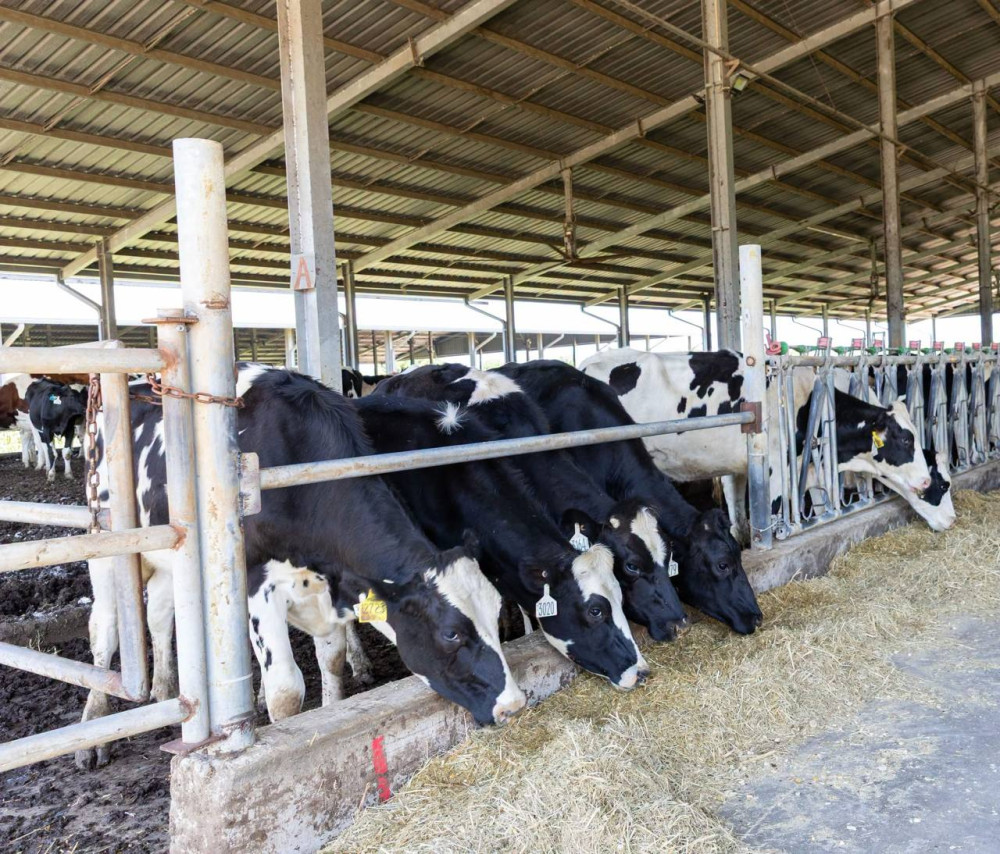
PHNOM PENH — Cambodia’s domestic dairy industry has taken another major step toward reducing reliance on imported milk products, with Kirisu Farm receiving a fresh shipment of 220 Holstein dairy cows from Australia.
The arrival, confirmed by the Australian Embassy on Friday, brings the farm’s total herd to approximately 1,400 head—more than doubling its original capacity since the first batch of 550 cows was imported six years ago. That initial shipment established Kirisu Farm as the Kingdom’s first large-scale commercial dairy operation.
The latest expansion is backed by the Cambodia Australia Partnership for Resilient Economic Development (CAPRED), Canberra’s flagship economic development program in the country. The collaboration underscores growing foreign technical assistance in Cambodia’s agri-processing sector, a key pillar of the government’s push toward value-added domestic production.
Economic Implications
While Cambodia’s demand for fresh milk and dairy products has surged alongside rising urban incomes and tourism, local production has historically covered only a fraction of consumption. By scaling the herd to 1,400 cows, Kirisu Farm is positioned to significantly boost raw milk output, directly curbing the volume of dairy imports—a move that saves foreign currency and stabilizes domestic supply chains.
Beyond import substitution, the expansion is expected to generate new skilled employment opportunities along the value chain, from feed production and veterinary care to logistics and cold-chain distribution. Australian officials have highlighted the project as a model for sustainable agri-business investment that aligns with Cambodia’s long-term food security goals.
With the new arrivals now in quarantine, Kirisu Farm is set to ramp up production ahead of the peak domestic consumption season, reinforcing its foothold in Cambodia’s evolving dairy market.